
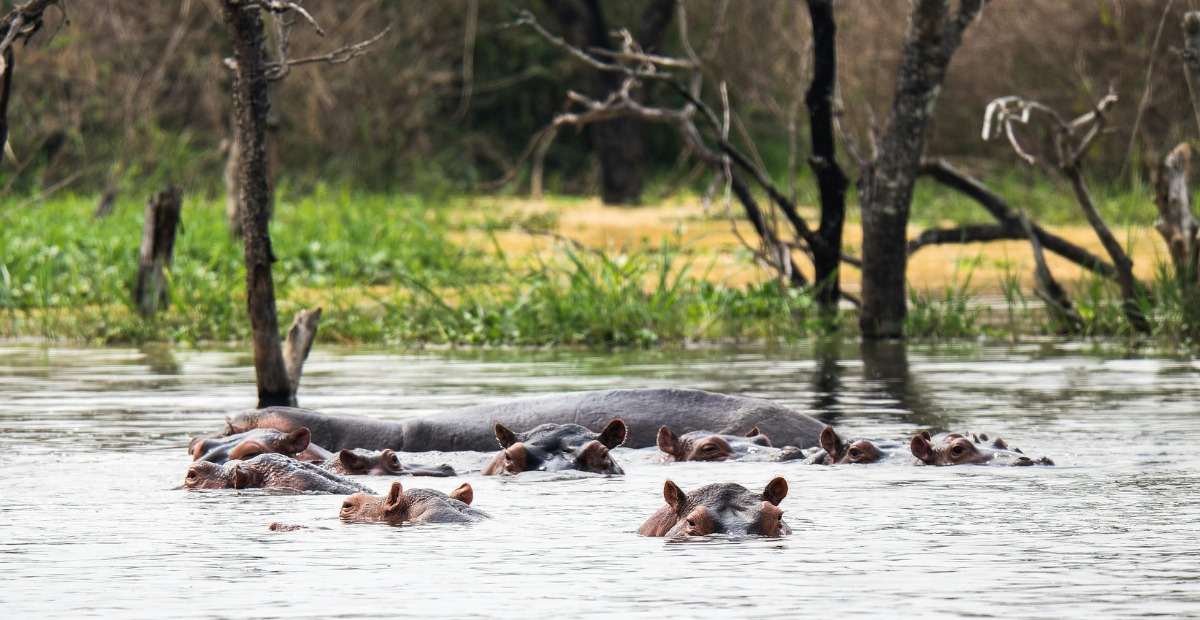
In the arid stretches of the Kenya-Uganda borderlands, pastoralist groups clash as water points and grazing lands disappear under mounting environmental pressure. Farther north, shrinking water levels in the Lake Chad Basin have heightened tensions among surrounding countries and communities, as livelihoods disappear alongside the lake itself. The situation is no different across the Sahel, where climate-driven desertification forces herders southward into farmlands, where competition over soil and space has turned neighbors into rivals. These tensions echo at the national scale along the Nile River, where Ethiopia’s Grand Ethiopian Renaissance Dam has reshaped regional relations, and Egypt, reliant on the Nile for 97% of its water, fears that control over the river threatens its very survival. In each case, environmental disruption reshapes human relationships, revealing how fragile peace becomes when the natural systems that sustain life are no longer protected.
The stories from a changing Earth reveal a hard truth: when natural systems fail, so does human harmony. When ecosystems are pushed beyond their limits, the impacts surface first as scarcity, then as fear, and eventually as conflict. Water, land, and food, once reliable sources of life, become sources of tension when they are degraded or depleted. Environmental harm does not stay contained within forests, rivers, or soil; it moves through communities, borders, and generations, shaping how people relate to one another and to the future they are trying to protect.
The reason these environmental changes affect human lives so profoundly is that nothing on Earth exists in isolation. Humans are woven into the same living systems as soil, water, plants, animals, and the climate. What happens to rivers shapes agriculture; what happens to land shapes livelihoods; what happens to ecosystems shapes social stability. A disruption in one part of this web sends ripples through the whole, linking environmental health directly to human well-being and peace. For instance, when land is degraded through deforestation or chemical overuse, pollinators like bees disappear, crops fail to reproduce, food supplies shrink, and competition over land and resources intensifies, often tipping already vulnerable communities into conflict. The image below offers a visual reminder of this truth: all life is interconnected, and when one thread is strained or broken, the entire web feels the tension.
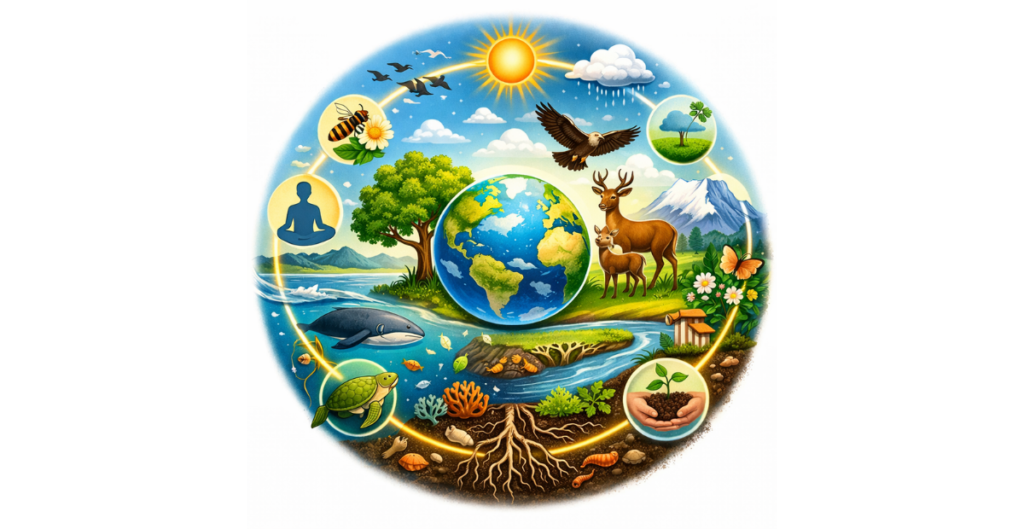
All life on Earth is interconnected. When one part is harmed, the whole is affected, and peace is fractured
Seen this way, protecting our environment is not separate from building peace, but foundational to it. If environmental harm fractures peace, then environmental care holds the potential to restore it. The same interconnected systems that spread disruption can also carry healing when they are protected and restored. When we care for the systems that sustain life, we reduce the conditions that give rise to fear, scarcity, and conflict, making protecting the environment an act of peace-making. By tending to land, water, and ecosystems with care, we create the conditions for stability, cooperation, and shared well-being.
This environmental protection process begins in our everyday choices, values, and practices that shape how we relate to the living world around us. Planting trees, tending gardens, and restoring local green spaces help rebuild ecosystems while providing food and habitat for wildlife. Conserving water, reducing waste, and choosing sustainable products eases the pressure on natural resources. Supporting community initiatives, environmental organizations, or educational programs amplifies the impact, spreading care across neighborhoods and nations. Even small actions, like composting, avoiding harmful chemicals, or protecting pollinators, ripple outward, strengthening the web of life and creating conditions for both ecological and social peace. By acting thoughtfully in our daily lives, each of us can become a steward of the Earth, contributing to a world where ecosystems thrive, and communities can live in harmony.

Living in harmony with the environment also means supporting systems that restore rather than deplete. Choosing sustainably produced goods, supporting regenerative agriculture, and protecting forests, wetlands, and waterways help rebuild the natural foundations that peace depends on. These landscapes are not only sources of food and water; they are stabilizing forces that reduce scarcity, protect biodiversity, and create resilience in the face of climate change.
While individual choices are powerful, environmental protection is amplified when communities, governments, and organizations act together. Policies that safeguard forests, rivers, and wetlands, investments in sustainable agriculture, and efforts to reduce pollution create broad, lasting benefits for both nature and people. Education and awareness programs inspire future generations to respect and care for the Earth, reinforcing the understanding that peace and sustainability are inseparable. Every effort, big or small, adds to a cumulative impact that strengthens the web of life.
Here are some actionable steps to become a steward of the earth and promote peace:

Brenda Awuor is a Kenyan-based environmental writer, researcher, environmental journalist, and sustainability marketer. Her work spans the full spectrum of environmental issues, including sustainability, pollution, biodiversity, and climate change. She is the founder of EcoVoicing, a sustainability communications and green marketing platform that helps amplify environmental brands and supports their marketing efforts through clear, credible, and impact-driven storytelling. Trained in environmental journalism and grounded in a solutions journalism approach, Brenda is deeply committed to storytelling as a tool for understanding and finding solutions to environmental challenges, advancing equity, and fostering peace by highlighting pathways toward collective and lasting change. She believes that environmental stewardship and peace-building are inseparable, rooted in respect for people, land, and future generations.