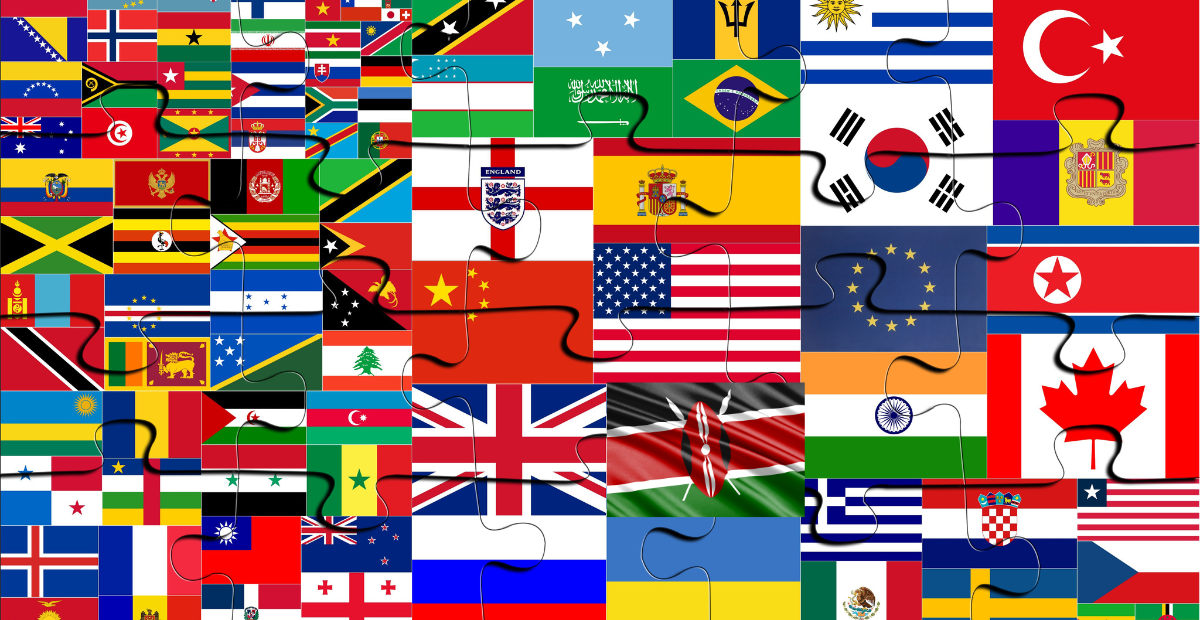
At some point, many of us begin to sense that our lives are connected to more than just our immediate families, communities, or nations. We feel it when global events affect our local realities, or when distant places shape the food we eat, the clothes we wear, and the air we breathe. The digital world has made this connection even more unmistakable, bringing global events, voices, and realities directly into our everyday lives. This awareness, that we are part of a seemingly vast yet connected global community, invites a deeper question: What does it mean to belong to the world we share?
Being a responsible citizen of the world means seeing yourself as part of an emerging, sustainable global community and allowing that understanding to shape how you live. It is the recognition that your choices, how you consume, how you treat others, and how you relate to the Earth, carry consequences beyond your immediate surroundings. This identity does not replace your national, cultural, or local commitments; it expands them. It asks you to hold care for people and ecosystems you may never meet, while honoring the interconnected systems that make life possible. With this broader sense of belonging comes responsibility: to act with awareness, compassion, and respect in a world where what we do in one place can affect lives far beyond it.
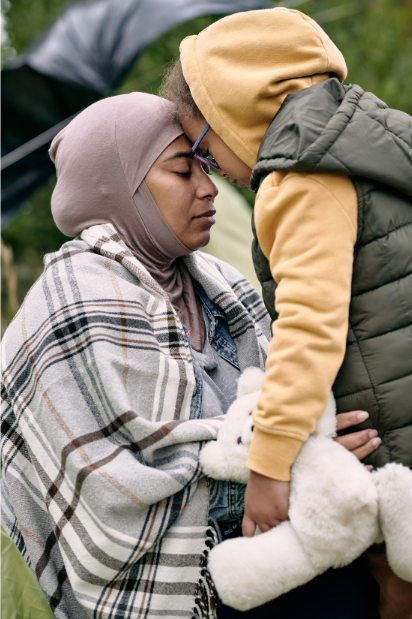
At the core of being a responsible citizen of the world is a shift from “us versus them” to “we.” This is not a vague ideal, but a fundamental way of understanding our place in the world. An “us vs. them” mindset narrows our sense of belonging, allowing us to dismiss the suffering of others and to treat the Earth as something separate from ourselves. This process, often called “othering,” happens when we see individuals or groups as fundamentally different, distant, or less deserving of empathy and belonging. For example, when refugees are treated as outsiders rather than as people in need of support, fear and suspicion can grow, communities can become divided, and opportunities for cooperation and peace are lost.
At the core of being a responsible citizen of the world is a shift from “us versus them” to “we.” This is not a vague ideal, but a fundamental way of understanding our place in the world. An “us vs. them” mindset narrows our sense of belonging, allowing us to dismiss the suffering of others and to treat the Earth as something separate from ourselves. This process, often called “othering,” happens when we see individuals or groups as fundamentally different, distant, or less deserving of empathy and belonging. For example, when refugees are treated as outsiders rather than as people in need of support, fear and suspicion can grow, communities can become divided, and opportunities for cooperation and peace are lost.
A “we” perspective, by contrast, recognizes that humanity shares a common fate and a shared dependence on the planet that sustains us. To live as a global citizen is to widen our circle of care, to see that peace, dignity, and well-being are not limited by borders, identities, or distance, but are responsibilities we hold together.
Before we explore how to put this ‘we’ mindset into action, take a moment to pause and reflect on your own experiences, perspectives, and the ways you relate to the world around you.
Understanding is powerful, but it becomes transformative when paired with action. Consider these practical ways to prevent othering and foster connection.
While resisting the impulse to “other” is at the heart of responsible global citizenship, it is only the first step. Being a global citizen also calls for actively engaging with the world in ways that promote understanding, justice, and cooperation. Once we recognize the shared humanity of all people, we can begin to explore the many ways our choices, actions, and relationships carry responsibilities that extend beyond our immediate communities.
A responsible global citizen cultivates awareness of multiple perspectives, respecting the diversity of cultures, beliefs, and experiences that shape our interconnected world. This means seeking to understand different viewpoints, building relationships across borders, and working collaboratively toward solutions that honor the needs of all. It also involves recognizing our interdependence, how the environmental, social, and political realities of one region affect communities across the globe, and using that understanding to guide ethical choices in our daily lives.
From appreciating cultural diversity to advocating for international cooperation and equity, these responsibilities provide a roadmap for acting with care and accountability in a globalized world. Each responsibility invites reflection on how we participate in the wider human community and how our actions can strengthen the bonds that hold our shared world together.
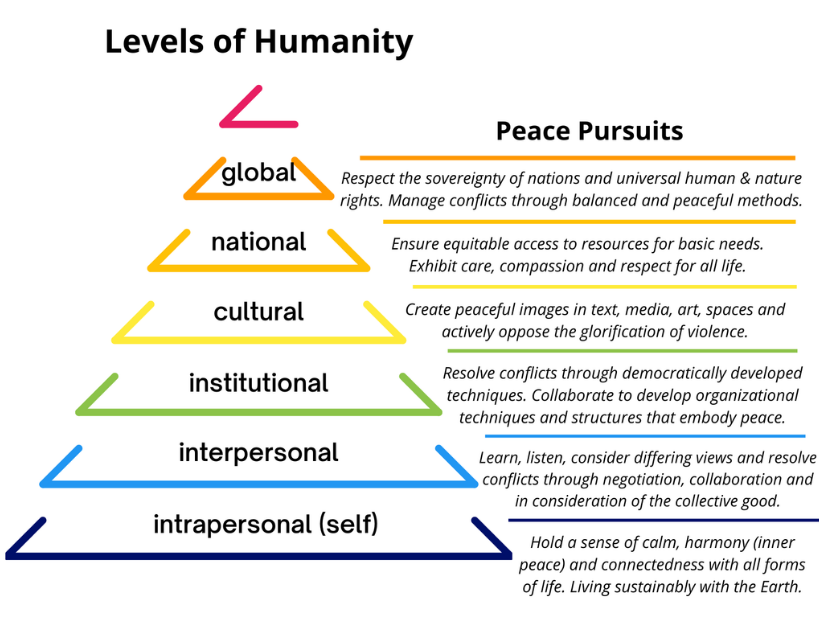
To bring the responsibilities of global citizenship to life, it helps to see how peace can be practiced across different levels of human interaction. From nurturing inner calm to advocating for justice on a global scale, each level presents unique opportunities to act with awareness, compassion, and care. The visual below illustrates these levels, showing how individual choices, relationships, institutions, cultures, nations, and the world are all interconnected in the pursuit of peace.
Being a responsible citizen of the world is not just an idea—it is a practice. Every choice you make, every action you take, ripples beyond your immediate circle, shaping the world around you. Notice how you can live with awareness, compassion, and respect for others and for the planet. Listen to diverse perspectives, act with care in your community, and advocate for justice and equity on a broader scale.
Start today by asking yourself:
Your responsibility as a global citizen is an ongoing journey. Each intentional action, no matter how small, helps weave a world where humanity and nature thrive together. Step forward, and let your choices reflect the global citizen you aspire to be.